What is a proof correction
Article written by
Publication Compass
TL;DR
Proof correction is your final review of a paper before publication.
Editors send a formatted proof; you check it for errors only.
Do not rewrite content at the proof stage — journals penalise this.
Most journals give 24 to 72 hours to return corrections.
Missing the deadline can delay or forfeit your publication slot.
You submitted your paper. Peer review is done. The journal accepted it. You think the hard work is over. Then an email arrives with a PDF attached and a short note asking you to return your proof corrections within 48 hours.
Most first-time authors are not prepared for this moment. They are not sure what they are supposed to check, what they are allowed to change, or what happens if they miss the window. The proof stage is brief, but it is consequential. A missed error here becomes a permanent part of the published record.
Understanding what a proof correction is, and how to do it well, is one of the most practical skills a student researcher can develop. This post walks through the full process so you know exactly what to expect.
What Is a Proof Correction?
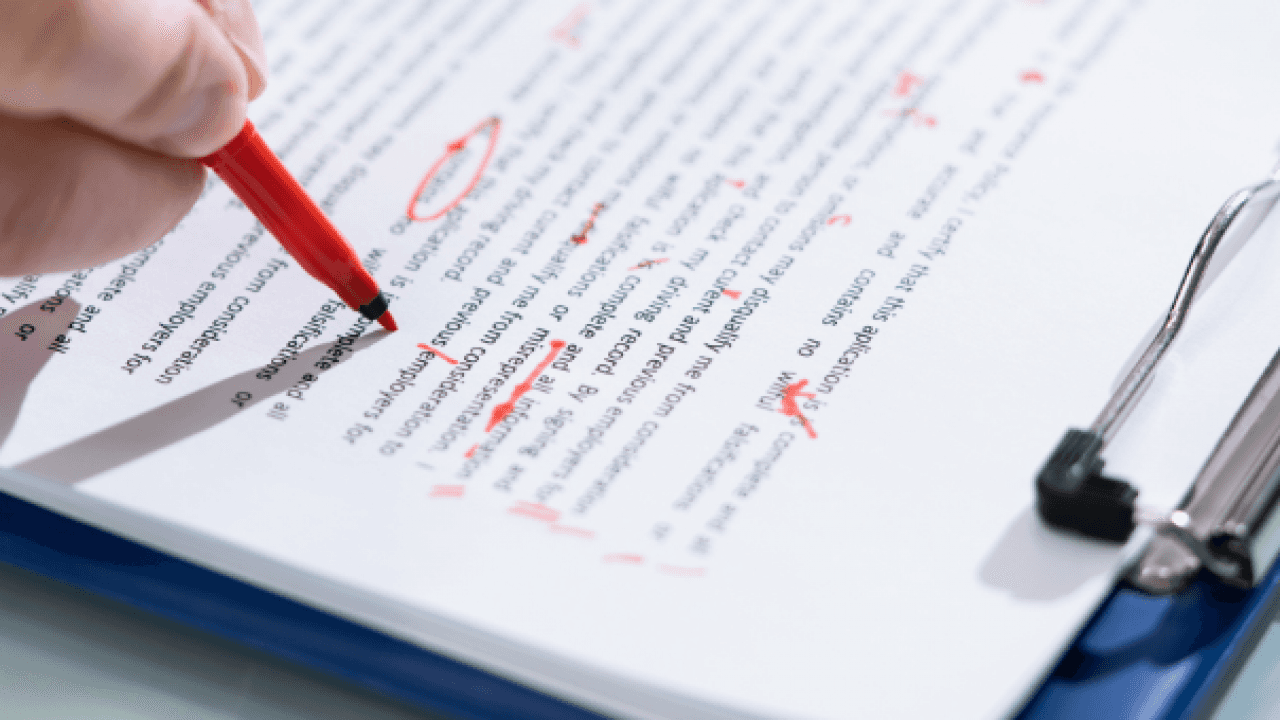
A proof correction is a set of changes or confirmations a researcher returns to a journal after receiving the typeset version of their accepted paper. The journal's production team formats the manuscript into its final layout, then sends this version, called a galley proof, to the author for review. The author checks for errors introduced during typesetting and returns a marked-up list of corrections. This is the last opportunity to fix mistakes before the paper is published permanently.
The word "proof" comes from the printing industry, where a test print was produced so compositors could catch errors before mass production. The concept is identical in academic publishing today, even when everything is digital. The journal has taken your text and reformatted it. That reformatting process can introduce problems: a symbol rendered incorrectly, a figure placed on the wrong page, a reference number shifted out of sequence. Your job is to find those problems and flag them clearly.
What a proof correction is not is a second chance to revise your argument. The science, the methodology, the conclusions — all of that was settled during peer review. Journals distinguish sharply between correcting typesetting errors and making author alterations. Author alterations at proof stage are generally discouraged and, at some publishers, charged as a fee. Elsevier's author guidelines, for example, state that extensive changes to content at proof stage may be subject to additional charges and editorial review.
If you are still learning how the publication process works from submission through to print, the overview of what happens after your paper is accepted covers each stage in sequence and gives useful context for where proof correction fits.
What Does a Proof Correction Actually Look Like?
A proof correction typically arrives as a PDF of the formatted paper, accompanied by a query sheet from the journal's production team. The query sheet lists specific questions the typesetters have flagged, such as an ambiguous abbreviation, a missing reference, or a figure caption that does not match the figure number in the text. You must answer every query on the sheet, even if your answer is simply "correct as set."
Beyond the query sheet, you read through the entire proof yourself. You are checking for a specific category of problems:
Typesetting errors in the main text, including misspellings introduced during formatting, incorrect line breaks, or corrupted special characters.
Errors in tables, including misaligned columns, incorrect units, or values that have shifted rows during layout.
Figure and caption accuracy, confirming that each figure appears in the correct position and that its caption matches the description in the text.
Reference list integrity, checking that every citation in the text has a corresponding entry in the reference list and that author names, journal titles, volume numbers, and page ranges are accurate.
Author information, including your name spelling, institutional affiliation, and contact email, which will appear on the published paper permanently.
If you are working with a platform like Publication Compass to prepare and structure your manuscript before submission, arriving at the proof stage with a clean, consistently formatted paper significantly reduces the number of errors a typesetter can introduce.
What Is a Proof Correction Deadline and What Happens If You Miss It?
A proof correction deadline is the time window a journal gives you to review and return your corrections. Most publishers set this window at 24 to 72 hours from the moment the proof is sent, though some journals allow up to five working days. The deadline is strict because journals schedule publication slots in advance. Holding a slot open for a late author disrupts the production queue for every other paper in that issue.
If you miss the deadline without contacting the journal, two things can happen. The journal may publish the paper as-is, meaning any errors in the proof become part of the permanent record. Alternatively, the paper may be pulled from the current issue and pushed to a later one, delaying your publication date by weeks or months. Neither outcome is desirable, particularly if you are a student researcher on a college application timeline.
If you know you will not be able to respond within the window, contact the production editor immediately. Most journals will grant a short extension if asked in advance. What they will not accommodate is silence followed by a late reply.
Understanding the full lifecycle of your paper, including what a galley proof is and how it differs from your original manuscript, helps you approach the proof correction stage with the right expectations.
How to Mark and Return Proof Corrections
Different journals have different systems for receiving corrections. The three most common are:
Annotated PDF. You open the proof PDF in Adobe Acrobat or a similar tool, use the comment and annotation features to mark errors, and return the annotated file by email. This is the most common method at large publishers including Springer Nature and Wiley.
Online proofing system. Some publishers use a browser-based tool where you click on text to flag errors and type corrections directly into a form. Elsevier's eProof system works this way. You log in via a link in the email, make corrections, and submit through the platform.
Correction list by email. Smaller journals, including many student-focused publications, ask you to send a plain-text list of corrections in a standardised format, such as: Page 3, Line 12: change "recieved" to "received."
Whichever method the journal uses, be precise. Give the page number, the line number or paragraph, the exact text as it currently reads, and the exact text as it should read. Vague corrections like "fix the reference section" are not actionable for a production editor working across dozens of papers simultaneously.
When you are first learning to write and structure research, building good habits around precision and detail pays dividends at every stage, including proof correction. The guide on what makes a research paper publishable covers the foundational standards journals apply from the moment they receive a submission.
Common Mistakes at the Proof Correction Stage
The most frequent mistake authors make at proof stage is treating it as a revision opportunity. Rewriting sentences, adding new data, or restructuring paragraphs at this point creates significant problems. It can invalidate the peer review, require a new editorial decision, and delay publication by months. If you genuinely discover a factual error in your own work at proof stage, contact the editor directly and explain the situation. Do not simply mark a content change as if it were a typesetting correction.
The second common mistake is not reading the proof carefully enough. Authors who skim the proof and return it quickly often miss errors in tables, figures, and reference lists, which are the areas most likely to be affected by typesetting. A corrupted equation or a mislabelled figure axis can undermine the scientific integrity of the paper. Spend time on the parts that are hardest to read, not just the body text.
The third mistake is ignoring the query sheet. Every question on the query sheet requires a response. Leaving queries unanswered forces the production editor to make a judgement call, and their judgement may not match your intention.
If you want to understand what happens when a paper faces problems after submission, including rejection and revision, the post on what rejection actually means and what to do next gives a clear breakdown of the options available to student researchers.
What Happens After You Return Your Proof Corrections?
After you return your corrections, the production team applies them to the final file. You will not typically see another version of the paper unless there is a significant unresolved query. The corrected file is then assigned a Digital Object Identifier (DOI), which is the permanent link that makes your paper citable and discoverable. If you want to understand why that identifier matters for your paper's visibility and citation record, the explanation of what a DOI is and why your paper needs one covers it in full.
Once the DOI is assigned, the paper is typically published online first as an advance article, ahead of its inclusion in a numbered journal issue. This online-first version is the citable, permanent version of your work. Any errors that remain at this point become part of the official record and can only be addressed through a formal correction notice or erratum, which is a separate published document acknowledging the error.
FAQ
What is a proof correction in academic publishing?
A proof correction is the author's final review of a typeset paper before it is published. The journal sends a formatted version of the accepted manuscript, and the author checks it for errors introduced during layout. Corrections are returned within a set deadline, usually 24 to 72 hours. The published paper reflects those corrections permanently.
Can I change my paper's content during proof correction?
No. Proof correction is for fixing typesetting errors, not revising content. Changes to arguments, data, or conclusions at this stage are considered author alterations and are generally not permitted. Some publishers charge fees for extensive changes. If you find a genuine factual error in your own work, contact the editor directly before marking it as a correction.
What should I check when reviewing a proof?
Check the main text for misspellings or corrupted characters, all tables for alignment and accuracy, figures and their captions, the reference list for completeness and accuracy, and your author information including name spelling and affiliation. Also answer every question on the journal's query sheet, even if the answer is that the current text is correct.
How long do I have to return proof corrections?
Most journals allow 24 to 72 hours, though some give up to five working days. The deadline is firm because journals schedule publication slots in advance. If you cannot respond in time, contact the production editor before the deadline expires. Journals will often grant a short extension if asked in advance, but they cannot accommodate late responses without notice.
What happens if there is still an error after my paper is published?
If an error appears in the published version, the journal can issue a formal correction notice, sometimes called an erratum, which is published separately and linked to the original paper. This process is managed by the journal and follows guidelines from bodies such as the Committee on Publication Ethics (COPE). It is a recognised part of the scholarly record, but it is far better to catch errors at proof stage.
The Proof Correction Stage Is Short. Treat It Seriously.
Proof correction is one of the shortest stages in the publication process. It is also one of the most consequential. The version you approve at proof stage is the version that enters the permanent scholarly record. Every researcher who cites your work, every student who reads it, every database that indexes it will see the version you signed off on. That is worth 48 focused hours of attention.
Read the proof in full. Answer every query. Return your corrections on time. And if you are still in the earlier stages of preparing your research for submission, the Publication Compass blog covers the full publication process from first draft to final proof, written specifically for student researchers navigating academic publishing for the first time.
Article written by
Publication Compass