International Journal of High School Research: what it publishes
Article written by
Publication Compass
TL;DR
IJHSR publishes original research written by high school students.
Accepted fields include STEM, social sciences, and humanities.
Peer review is conducted by qualified academic reviewers.
Submission requires a formatted manuscript and a cover letter.
Open access means your published paper is free for anyone to read.
You have done the research. You have written the paper. Now you want to know whether the International Journal of High School Research is the right place to send it. That is a reasonable question, and it deserves a direct answer.
Many students reach this point and stall. They are not sure what a journal like this actually accepts, how competitive it is, or whether their work meets the standard. Those doubts are normal. They are also solvable.
This post covers exactly what the International Journal of High School Research publishes, what its review process looks like, and what you need to prepare before you submit.
What the International Journal of High School Research Publishes
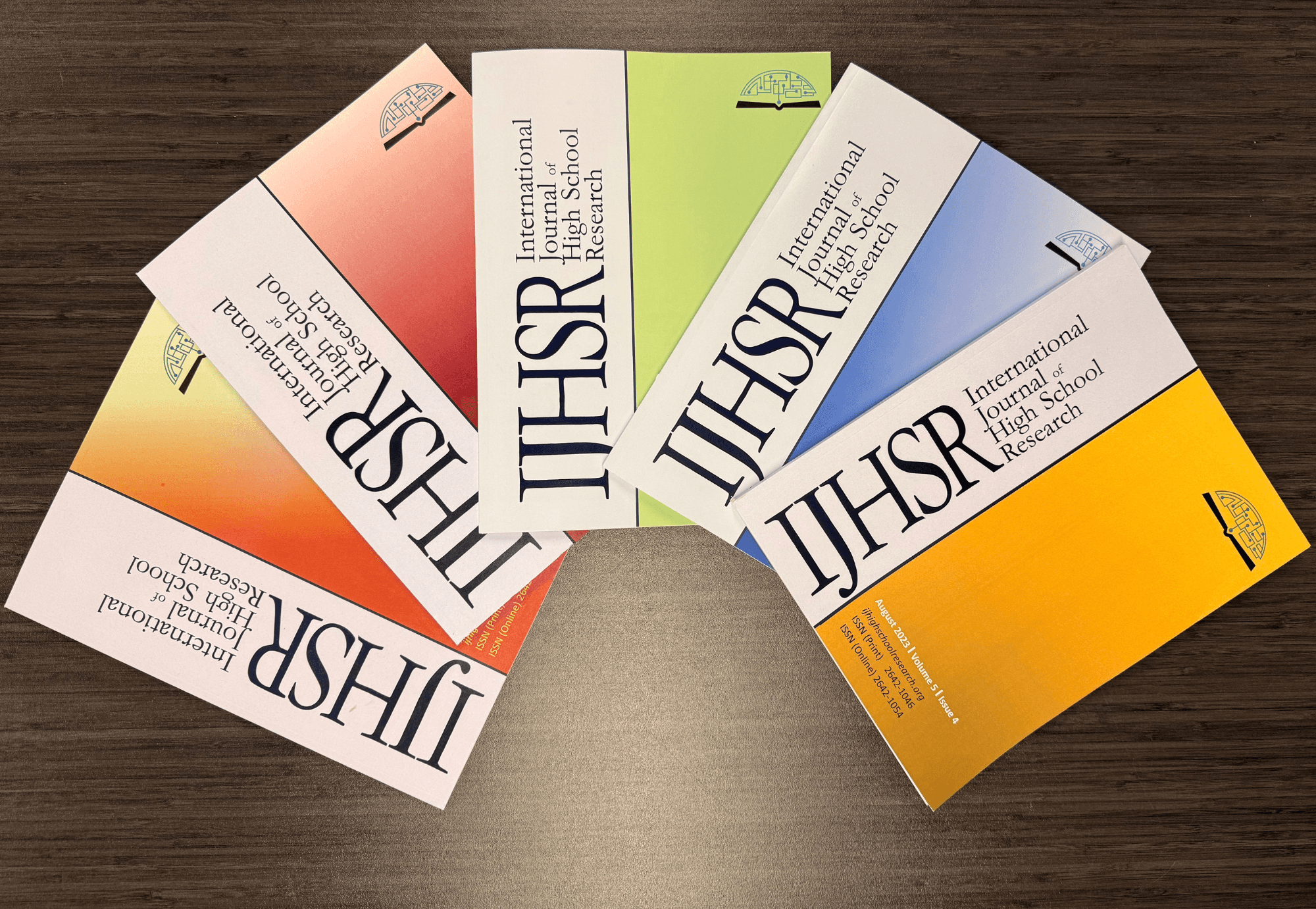
The International Journal of High School Research (IJHSR) publishes original research papers written by high school students across a wide range of academic disciplines. Accepted submissions span the natural sciences, social sciences, mathematics, engineering, and the humanities. The defining requirement is that the work must be student-authored and present original findings, analysis, or argument.
IJHSR is an open-access journal. That means every published paper is freely available online, without a paywall. According to the Directory of Open Access Journals (DOAJ), open-access publishing removes cost barriers for readers worldwide, which increases the visibility of your work significantly compared to subscription-only journals.
The journal accepts several types of submissions. Original research articles are the most common. These present a question, a method, data, and conclusions. Review articles, which synthesise existing literature on a topic, are also considered. Some journals in this space accept shorter research notes or commentary pieces, though IJHSR's primary focus is full research articles.
If you are still deciding whether to submit to a journal or explore other formats first, the post on journal vs conference vs preprint server differences explains how each option compares and when each makes sense.
Which Disciplines Are Accepted
IJHSR accepts research from biology, chemistry, physics, mathematics, computer science, psychology, economics, history, literature, and environmental science, among others. There is no single dominant field. The journal is explicitly interdisciplinary, which makes it accessible to students whose research does not fit neatly into one category.
This breadth is intentional. High school research often sits at the intersection of fields. A study on social media use and adolescent sleep patterns, for example, draws on psychology, public health, and data analysis simultaneously. IJHSR is structured to accommodate that kind of work.
What the journal does not publish is opinion writing, personal essays, or work that does not follow a recognisable research methodology. Your paper needs a clear research question, a defined method for answering it, and conclusions grounded in evidence. If your paper has those elements, the discipline is unlikely to be a barrier.
If you are still developing your submission and want guidance on structuring the process from the beginning, how to publish a research paper as a high school student walks through each stage in detail.
How the Peer Review Process Works at IJHSR
IJHSR uses a peer review process in which submitted papers are evaluated by qualified academic reviewers before an editorial decision is made. Reviewers assess the quality of the research question, the soundness of the methodology, the accuracy of the analysis, and the clarity of the writing. This is standard practice across academic publishing.
Peer review at student-focused journals like IJHSR typically involves reviewers who are graduate students, faculty members, or researchers with relevant subject expertise. The Committee on Publication Ethics (COPE) defines peer review as a process that provides authors with feedback to improve their work and helps editors make informed decisions about what to publish. IJHSR operates within that framework.
Most submissions go through one of three outcomes. The paper is accepted, accepted with revisions required, or rejected. A request for revisions is not a rejection. It means the reviewers see potential in the work and want specific changes before it can be published. Responding carefully to reviewer comments is one of the most important skills in academic publishing.
If you want to understand what happens on the other side of the submission portal, what is peer review and what happens to your paper covers the full process from submission to decision.
Publication Compass is a platform designed to help student researchers prepare for exactly this process. It analyses your draft, identifies structural and methodological gaps, and helps you match your paper to the right journal before you submit. If you want to go into your IJHSR submission with a stronger manuscript, you can join the waitlist for early access.
What You Need to Submit to the International Journal of High School Research
A complete IJHSR submission requires a formatted manuscript, a cover letter, and confirmation that the work is original and not under review elsewhere. Most journals also require an abstract, author information, and a declaration that any human subjects research was conducted ethically.
Here is the standard preparation sequence for an IJHSR submission:
Write and revise your full manuscript, including an abstract, introduction, methodology, results, discussion, and references.
Format your paper according to IJHSR's author guidelines, which are published on their official website and cover font, spacing, citation style, and figure requirements.
Write a cover letter addressed to the editor. This letter introduces your paper, states why it is appropriate for IJHSR, and confirms the paper has not been submitted elsewhere simultaneously.
Check your citations for accuracy and consistency. IJHSR specifies a citation format in its guidelines, and inconsistency is one of the most common reasons papers are returned before review.
Submit through the journal's online submission system and retain a copy of your confirmation.
Each of these steps has its own complexity. The cover letter alone is something many first-time submitters underestimate. A strong cover letter frames your research clearly and shows the editor why the paper belongs in that journal. For a detailed guide, how to write a cover letter for journal submission covers what to include and what to avoid.
How Competitive Is IJHSR
IJHSR is a peer-reviewed journal with an open submission model, meaning any high school student can submit. Acceptance is not guaranteed. Papers that lack a clear methodology, rely on unsupported claims, or are poorly structured are unlikely to pass peer review regardless of the topic.
The journal is not the most selective publication in academic research, but that does not make it easy. The standard for what counts as publishable research is real. Reviewers expect logical argumentation, honest treatment of limitations, and accurate referencing. A paper that meets those criteria has a genuine chance.
Students who submit papers that have been reviewed and revised before submission consistently perform better than those who submit first drafts. This is not a speculation. It reflects how peer review works across all journals. Reviewers respond to evidence of careful thinking, not polished language alone.
For a broader view of how to approach journal selection strategically, how to choose the right journal for your research paper explains the factors that matter most when matching your work to a publication.
What Happens After Your Paper Is Accepted
After IJHSR accepts your paper, the journal moves it through copyediting, formatting, and final author review before publication. You will typically receive a proof, which is a formatted version of your article, and asked to confirm it is accurate before it goes live.
Once published, your paper receives a Digital Object Identifier (DOI). A DOI is a permanent, unique link to your paper that makes it citable in other academic work. It is how researchers reference your paper and how databases index it. Because IJHSR is open access, anyone with internet access can find and read your published work.
Published papers can be listed on college applications, shared with teachers, and referenced in future research. The value of publication at this stage is not primarily about prestige. It is about demonstrating that you can conduct, complete, and communicate original research to an external standard.
Frequently Asked Questions
Is the International Journal of High School Research legitimate?
IJHSR is a peer-reviewed, open-access journal that publishes student research. It uses an editorial review process consistent with standard academic publishing practice as defined by bodies like the Committee on Publication Ethics (COPE). As with any journal, students should verify the journal's current status and editorial board before submitting.
Does IJHSR charge a fee to publish?
Many open-access journals charge an Article Processing Charge (APC) to cover publication costs. Whether IJHSR charges a fee depends on its current publishing model. Students should check the journal's official author guidelines for the most current fee information before submitting, as policies can change.
How long does review take at IJHSR?
Review timelines at student-focused journals vary. Most peer-reviewed journals take between four and twelve weeks to return an initial decision, though this depends on reviewer availability and submission volume. IJHSR's website or editorial contact can provide current estimates for your submission period.
Can I submit to IJHSR if I worked with a teacher or mentor?
Yes. Research conducted with guidance from a teacher, professor, or mentor is acceptable at most student journals, including IJHSR, as long as the student is the primary author and the intellectual work is their own. Co-authorship with an adult supervisor is generally permitted and should be disclosed clearly in the submission.
What citation format does IJHSR require?
IJHSR specifies its required citation format in its official author guidelines. Common formats used by science and social science journals include APA (American Psychological Association) and AMA (American Medical Association) style. Always check the journal's current guidelines directly, as requirements can be updated. For a practical walkthrough, how to format citations for academic journal submission covers the most common styles used in student research.
Getting Your Paper Ready to Submit
The International Journal of High School Research is a real publication pathway for student researchers. It accepts original work across disciplines, uses peer review, and publishes open-access papers that are permanently citable. The barrier to entry is not prestige or connections. It is preparation.
Read the journal's submission guidelines carefully. Revise your manuscript before you submit. Write a cover letter that speaks directly to the journal's scope. Those three actions alone put your paper in a stronger position than most first-time submissions. For a complete overview of the full publication process from draft to decision, visit the Publication Compass blog for guides written specifically for student researchers.
Article written by
Publication Compass